Antalya Villa Solar Energy Systems: Residential Solar Cost and Battery Storage Solutions
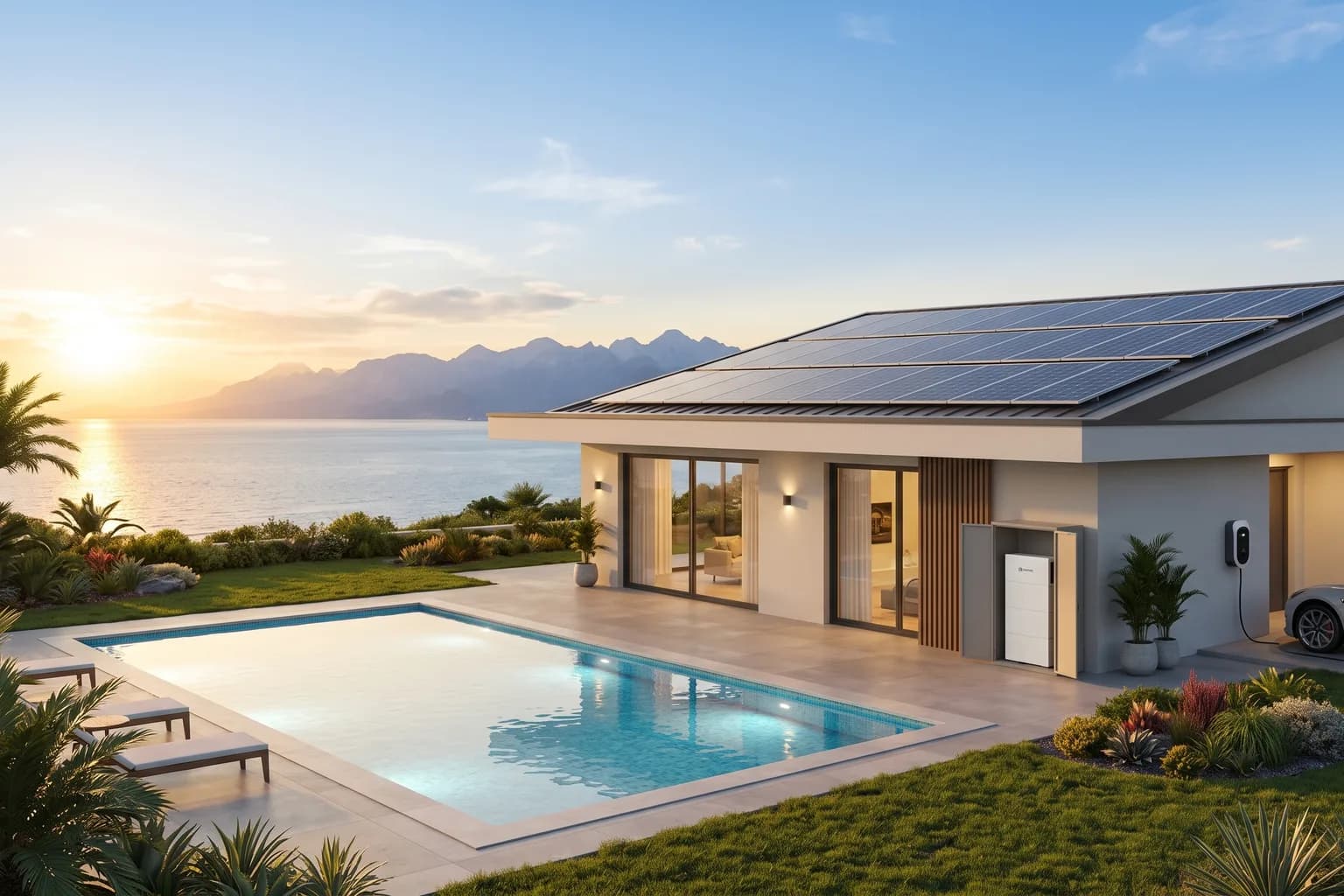
Across Antalya, Isparta, Burdur, and the wider region including Afyon, Denizli, and Konya, energy independence for luxury homes and detached villas has become less of an option and more of a necessity. The region's strong solar potential makes On-Grid (grid-connected) and hybrid battery storage systems one of the leading investment choices for villa owners. So how should you plan the right solar system for your detached home?
What Is Villa-Type Solar for Detached Homes?
Villa-type solar (PV) involves panels installed on a home's roof or grounds that generate electricity. The direct current (DC) produced by the panels is converted into usable alternating current (AC) through an inverter.
Electricity consumption in detached villas is noticeably higher than in standard homes, driven by heat pumps, pool circulation pumps, air conditioning units, and EV chargers. This typically means villa-type systems need to be sized larger than an average residential installation.
How Does an On-Grid Villa Solar System Work?
In On-Grid systems, the villa remains connected to the grid. Electricity generated during the day is used on-site first; any surplus can be exported to the grid and settled through net-metering or sale mechanisms under current regulations. During hours without sunlight, electricity is drawn from the grid as usual.
- A lower-risk starting point for villa owners who don't want to fully disconnect from the grid.
- Lower upfront cost than hybrid systems, since no battery is required.
- Connection and metering under the unlicensed generation framework are handled together with the local distribution company.
Hybrid and Battery-Backed Villa Solar Systems
Villa owners who don't want to be affected by grid outages typically choose systems with a hybrid inverter and integrated battery storage. Surplus energy generated during the day is stored in the batteries; in the evening or during an outage, this stored energy can power circuits connected to a critical load panel, such as lighting, refrigeration, internet, and security systems.
Battery capacity is sized based on the villa's nighttime consumption profile, the desired backup duration, and the battery technology's depth of discharge (DoD). Lithium-ion batteries are commonly chosen for villa projects due to their long cycle life and efficiency.
How Is the Right Solar Capacity Determined for a Villa?
The solar capacity a villa needs cannot be determined by floor area alone. Sizing the system correctly requires analyzing the home's historical electricity consumption, the usable roof or ground area, and how consumption is distributed throughout the day.
- Monthly and seasonal electricity consumption,
- Operating hours of high-power equipment such as pool pumps, heat pumps, and air conditioning,
- EV charging plans,
- Orientation, tilt, and shading of the available roof or ground area,
- Future loads planned for the home (an added room, a jacuzzi, an extra charger, etc.)
Offers based only on a standard package, without this analysis, can result in a system that is undersized or oversized for the villa's actual needs.
Regional Advantages of Villa Solar Investment in Antalya, Isparta, and Burdur
According to the Ministry of Energy's Solar Energy Potential Atlas (GEPA), Antalya receives over 3,000 hours of sunshine per year, placing it among the provinces with the highest solar potential in Turkey. This means strong year-round generation potential for villa projects along the coast.
Isparta and Burdur sit at higher elevations, which can keep summer ambient temperatures relatively lower than in coastal areas. Since solar panel efficiency tends to decrease at higher temperatures, villa projects in these areas may benefit from more favorable module operating temperatures, though actual performance still depends on site conditions and system design.
How Does the Villa Solar Installation Process Work?
- 1. Site survey and consumption analysis: The villa's electricity bills and site conditions are reviewed.
- 2. System design: The On-Grid or hybrid battery model, capacity, and battery size are determined.
- 3. Engineering: Panel layout, inverter selection, and the electrical connection diagram are prepared.
- 4. Connection and permitting: The connection agreement and required approvals are completed with the local distribution company.
- 5. Installation: Mechanical mounting and electrical connections are carried out.
- 6. Testing and commissioning: The system is tested and the monitoring platform is activated.
What to Consider Before Making an Investment Decision
The payback period of a villa-type solar investment varies from project to project depending on factors such as system capacity, self-consumption ratio, battery use, and current electricity tariffs. A clear payback estimate can only be provided through a feasibility study based on your villa's own consumption data.
Quality solar panels typically carry performance warranties exceeding 25 years, making villa-type solar a long-term energy planning decision.
Gürsan Enerji provides site survey, engineering, battery capacity planning, and licensed installation services for villa and detached home projects across Antalya, Isparta, and Burdur. Contact us to find out the ideal solar capacity and system type for your villa.
Expert Support for Your Project
Benefit from our free site survey and consultancy for solar energy, electrical infrastructure and charging station projects.
Contact Usarrow_forward