Antalya Agricultural Irrigation Solar Systems (Off-Grid Solar) Guide
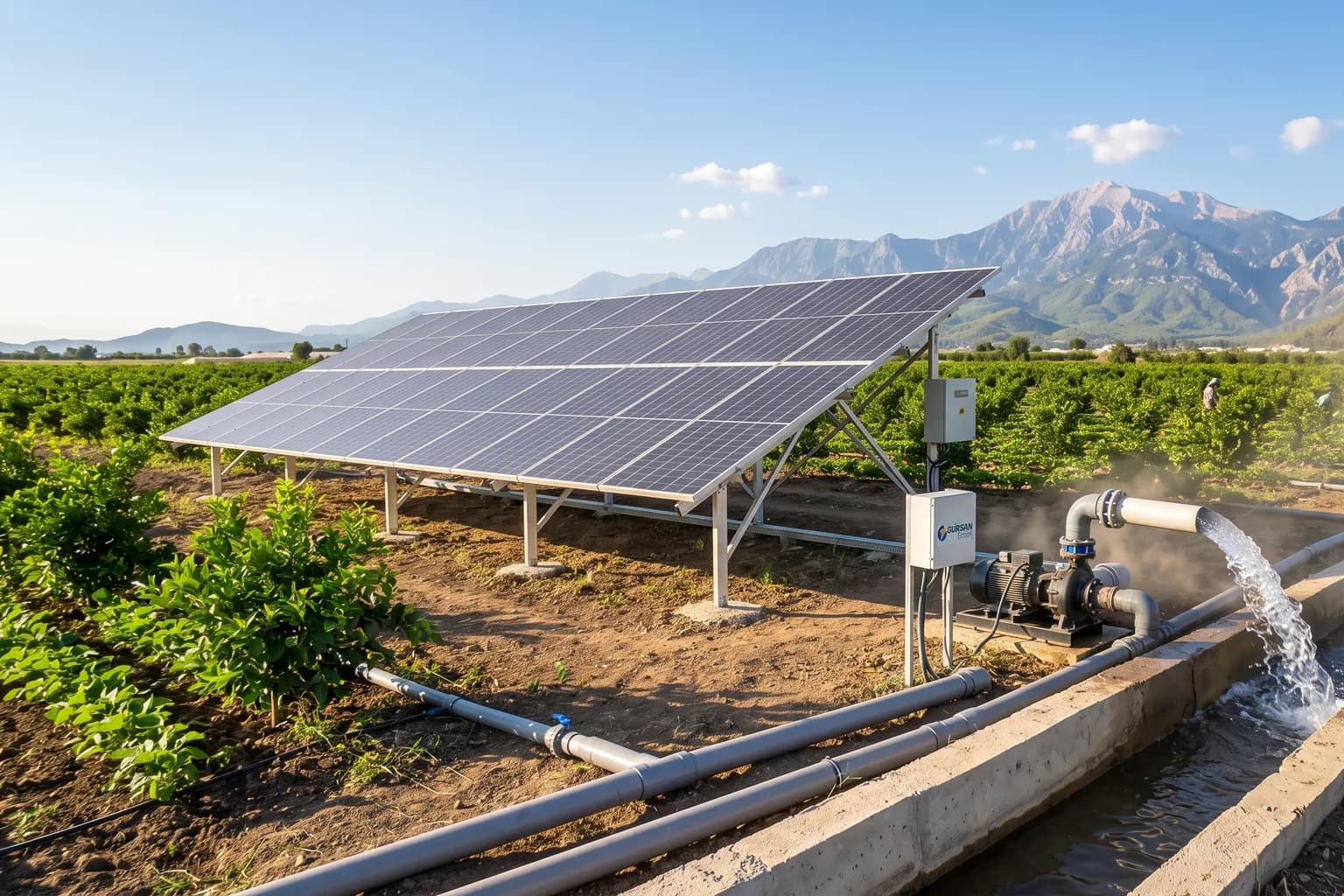
Across Antalya, Isparta, Burdur, and neighboring agricultural regions such as Konya, Afyon, and Denizli, rising diesel and grid electricity costs have become one of the largest expense items for farmers and agricultural businesses. On farmland where grid lines are absent or insufficient, Off-Grid (grid-independent) agricultural irrigation solar systems enable uninterrupted irrigation.
Components of an Agricultural Irrigation Solar System
An agricultural irrigation solar system is built around three main components: solar panels, an irrigation drive (inverter), and the pump. The pump type depends on the water source:
- Submersible (deep well) pumps: used for projects that draw water from a well.
- Surface pumps: used where water is drawn from a pond, canal, or other open water source.
- Water storage tank or pond: in battery-free systems, pumping water into a storage tank during daylight hours is a common way to provide indirect storage.
How Does an Off-Grid Agricultural Irrigation System Work?
DC current from the solar panels is converted into the AC current the pump needs by an irrigation drive with Maximum Power Point Tracking (MPPT). The drive automatically adjusts the pump's operating speed based on changing solar irradiance throughout the day, keeping energy use efficient.
- Battery-free systems: preferred for farmland that only requires daytime irrigation; water can be pumped into a tank as a form of indirect storage when needed.
- Battery-backed systems: provide uninterrupted operation for nighttime irrigation or drip lines that require constant pressure.
How Is the Right Solar Power Calculated for an Irrigation Pump?
The panel power required is calculated based on the pump's Horsepower (HP) or Kilowatt (kW) rating, daily water demand, flow rate, and pumping head (pressure).
As highlighted in IEC 62253, the international standard for PV pumping systems, solar irradiance varies throughout the day and across seasons, so it is common engineering practice to size the panel array above the pump motor's rated power. A widely used field practice is installing panel capacity roughly 20-50% above the motor's rated power; the exact ratio is determined through engineering calculations based on the project's location, the pump's starting (inrush) current, and daily irrigation duration.
Key Considerations for Farmland Installations in Antalya, Isparta, and Burdur
In Antalya's greenhouse and citrus-growing plains, irrigation needs can continue year-round, while in Isparta's rose and apple orchards and Burdur's grain and orchard farming, irrigation schedules tend to follow a more defined seasonal pattern. This difference directly affects whether a battery-backed or battery-free design is the better fit.
Panel tilt, wind resistance, and ground conditions matter for mounting. In the more inland areas of Isparta and Burdur, where winters are harsher, structural durability is a priority; in high-temperature areas like Antalya, leaving adequate clearance for panel ventilation helps prevent efficiency loss.
Routing cables so they don't interfere with tillage or harvesting equipment, and setting panel ground clearance to reduce the risk of damage from animals or rodents, are also important parts of the field application.
Benefits of Off-Grid Agricultural Irrigation Solar for Your Operation
- Irrigation access on remote farmland without the cost of extending a grid line,
- Reduced dependence on diesel and generator use,
- Low operating and maintenance costs,
- A system that runs automatically on sunny days with minimal operator involvement,
Agricultural Irrigation Solar Installation Process
- 1. Water source and flow analysis: Well, pond, or canal flow rate and pump requirements are determined.
- 2. Irrigation plan review: Crop pattern, irrigation schedule, and daily water needs are assessed.
- 3. System design: Panel power, drive, and pump are matched through engineering calculations.
- 4. Field installation: Structural mounting, panel installation, and cabling are carried out.
- 5. Commissioning: Pump and drive settings are tested and the system is made ready for irrigation.
Gürsan Enerji provides turnkey engineering solutions for agricultural irrigation projects in Antalya, Isparta, and Burdur — from water source analysis to pump-drive selection, panel sizing, and field installation.
Expert Support for Your Project
Benefit from our free site survey and consultancy for solar energy, electrical infrastructure and charging station projects.
Contact Usarrow_forward