Rooftop Solar for Factories and Businesses in Antalya: Cost, Benefits and Installation Process
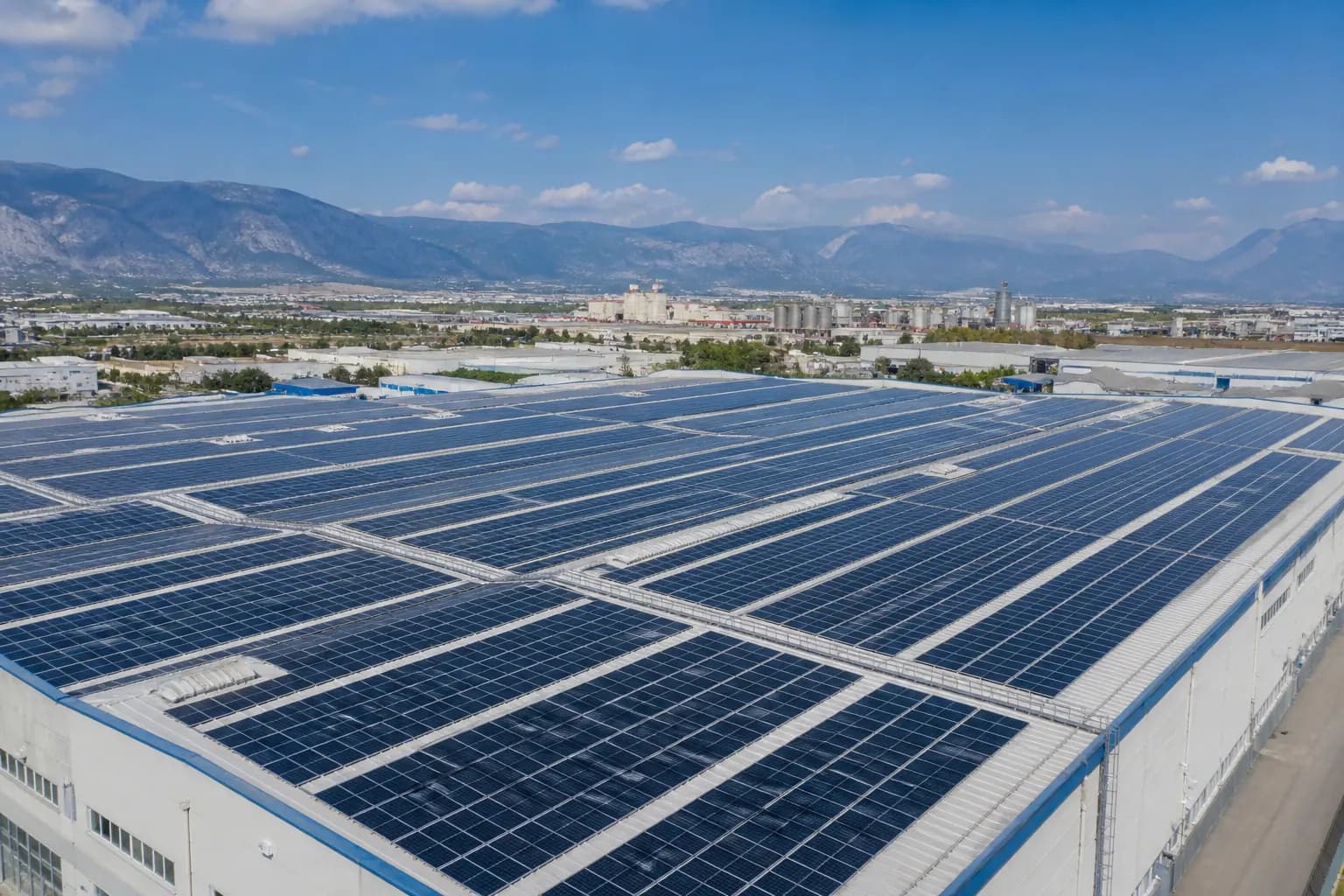
For factories and businesses operating in Antalya, energy costs have become one of the major items in total operating expenses. Especially for production facilities, factories, warehouses, hotels, and commercial sites with high electricity consumption, keeping electricity costs under control over the long term is critically important.
Rooftop solar PV (photovoltaic) systems enable businesses to use existing roof space for electricity generation. Given Antalya’s solar potential, a properly engineered rooftop PV investment can become a long-term energy asset for the business.
So how is a solar energy system installed on a factory roof? How many panels are needed? How is the solar investment cost calculated? What studies should be completed before installation?
This guide covers the key points to know for rooftop solar projects for factories and businesses in Antalya.
What Is Rooftop Solar PV?
Rooftop solar PV is a system that generates electricity through solar panels placed on a building’s usable roof area.
Direct current (DC) produced by the panels is converted by inverters into alternating current (AC) that can be used on site. Generated electricity can serve the facility’s demand depending on the project’s technical design and operating model.
Especially for factories and commercial facilities with large roofs, converting unused roof space into an energy production area is a major advantage.
This way, the business continues operations while also generating electricity at its own site.
Why Are Factories Switching to Solar?
Machines, production lines, HVAC, pumps, compressors, and other electrical equipment in factories can consume large amounts of energy.
Therefore, changes in electricity costs can directly affect production costs.
Key benefits solar investments can provide include:
- Generating part of the facility’s own electricity,
- Reducing energy drawn from the grid,
- Making long-term energy costs more predictable,
- Utilizing unused roof space,
- Increasing renewable energy use,
- Supporting sustainability goals
However, every facility has a different consumption profile. Sizing a system based only on roof size is not correct.
Advantages of Rooftop Solar in Antalya
In solar investments, the site’s solar irradiance conditions are one of the key factors affecting system performance.
Antalya and the Mediterranean region overall offer strong potential for solar projects.
But high solar potential alone does not guarantee a successful PV project.
Panel layout, roof orientation and tilt, nearby shading, equipment characteristics, and electrical infrastructure must be evaluated together.
This is where professional engineering comes in.
How Is a Factory’s Solar Need Calculated?
To determine the required PV capacity for a factory, the facility’s energy consumption profile must be analyzed first.
Looking only at the monthly bill amount is not enough.
The assessment should consider:
- Monthly and annual electricity consumption,
- Hourly consumption patterns during the day,
- Operating shifts,
- Usable roof area,
- Roof orientation and tilt,
- Shading conditions,
- Electrical infrastructure,
- Future capacity growth
For example, two factories with similar monthly bills may consume energy at different hours. Recommending the same capacity for both may not yield the right result.
A correct solar project must be built on the facility’s real consumption data.
What Determines Rooftop Solar Cost?
It is not possible to express rooftop solar installation cost for factories or businesses as a single fixed figure.
Main factors affecting total investment cost include:
Installed Capacity
Project capacity in kWp or MWp directly affects the amount of equipment required.
Solar Panels
Panel technology, power rating, efficiency, and product features are important parts of investment cost.
Inverter Selection
The inverter is a critical component that makes panel output usable within the facility.
Roof Structure
Not every factory roof is the same. Structural system, cladding, tilt, and current condition can affect mounting methods.
Electrical Infrastructure
Existing switchboards, connection points, transformer setup, and other technical requirements must be assessed in the project scope.
Engineering and Implementation
Engineering, site works, installation, testing, and commissioning are also part of the total investment scope.
Therefore a standard online “solar price” is not enough to determine a factory’s real investment cost.
How Long Does a Solar Investment Take to Pay Back?
One of the most common questions in solar investments is payback period.
However, there is no single payback period that applies to every project.
Payback is affected by:
- Total system cost,
- Annual energy production,
- Facility electricity consumption,
- How much of the generated energy is used on site,
- Current electricity prices,
- System performance,
- Maintenance and operating conditions
A sound payback calculation therefore requires analyzing consumption data and feasible PV capacity first.
One of the key purposes of a feasibility study is to show what the investment will deliver economically for the business.
How Does Rooftop Solar Installation Progress?
A professional rooftop solar project is more than mounting panels on a roof.
The process generally includes:
- 1. Survey and site analysis: The facility and roof structure are inspected.
- 2. Electricity consumption analysis: Current facility consumption is evaluated.
- 3. Feasibility study: Installable capacity and estimated generation are calculated.
- 4. Engineering design: Panel layout, inverters, electrical connections, and system architecture are defined.
- 5. Permits and formal processes: Required applications and approvals are handled.
- 6. Installation: Mechanical and electrical works are completed.
- 7. Testing and commissioning: System checks are completed and the plant is prepared for generation.
For large commercial solar projects, managing these stages with experienced engineering teams is important for a healthy delivery.
Why Professional Engineering Matters for Solar in Antalya
Using high-capacity panels alone is not enough for a good solar project.
The real goal is a system matched to the facility’s consumption profile and physical conditions.
An undersized system may fail to meet demand. A project without correct needs and site analysis may underperform economically.
Therefore engineering, consumption analysis, and feasibility should be evaluated together before an investment decision.
Learn Your Facility’s Solar Potential
Every factory has different consumption, roof area, and technical infrastructure. Correct PV capacity and investment cost must therefore be determined for each facility.
Gürsan Enerji handles survey, feasibility, engineering, and implementation as an integrated process for commercial and industrial solar projects.
To learn how much solar capacity can be installed on your roof, estimated generation potential, and investment cost, contact Gürsan Enerji to request a project-specific assessment and proposal.
Expert Support for Your Project
Benefit from our free site survey and consultancy for solar energy, electrical infrastructure and charging station projects.
Contact Usarrow_forward