What Is a Solar Power Plant (GES) and How Does It Work?
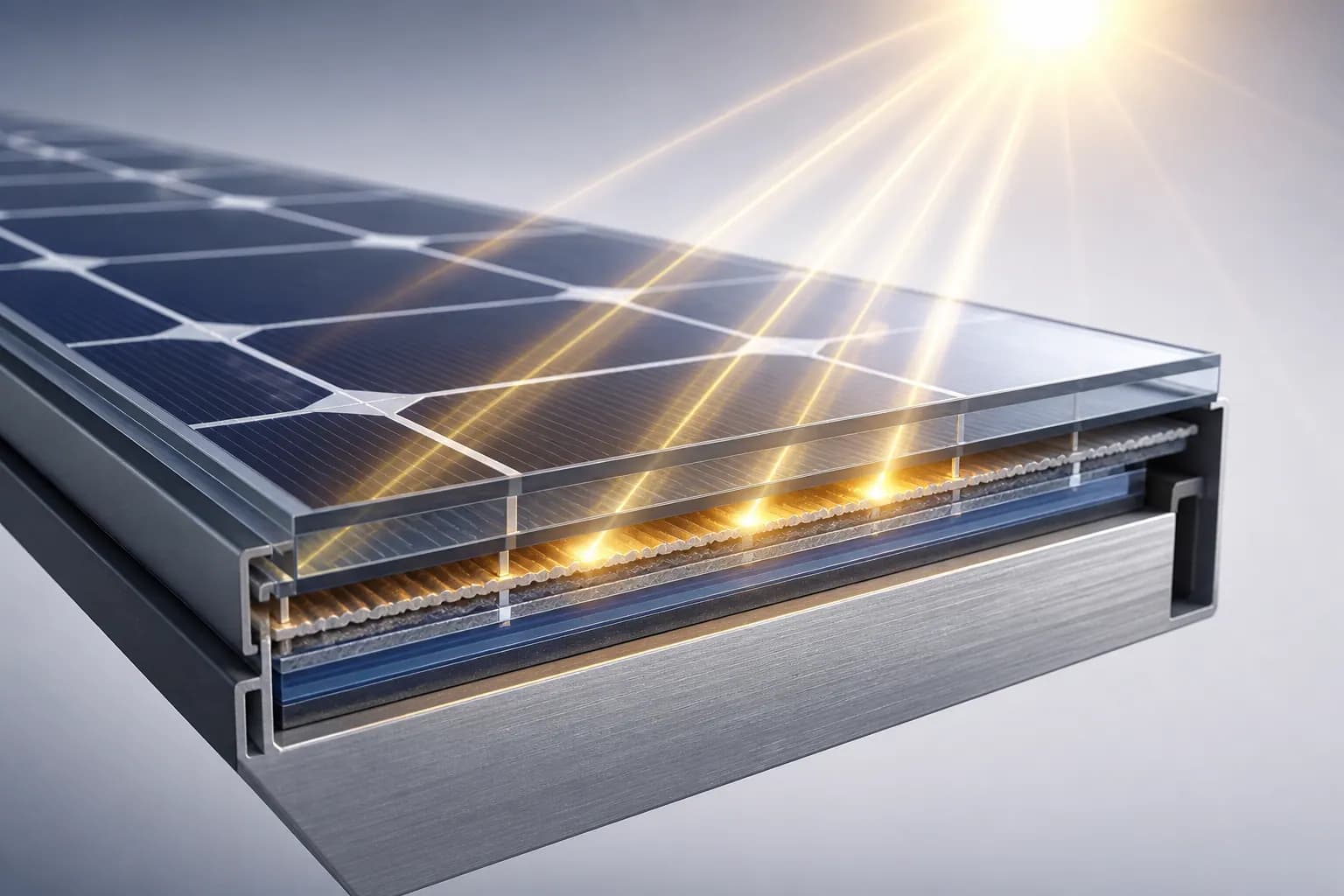
GES is the Turkish abbreviation for "Güneş Enerji Santrali" — a solar power plant. It refers to any system that converts sunlight directly into electricity using photovoltaic panels. From a few-kilowatt system on a home's roof to megawatt-scale plants on open land, every facility that generates electricity from the sun is called a GES.
In this guide, we explain step by step what GES means, how it works, its components and types, and the stages a solar project goes through.
What Does GES Mean?
GES stands for Güneş Enerji Santrali (solar power plant). In everyday use, "GES", "solar energy system", "solar system", and "PV (photovoltaic) system" are mostly used interchangeably.
Although "power plant" suggests a large facility, in regulation and in the industry every solar system that generates electricity is called a GES regardless of size: a 10 kWp system on a villa roof and a 500 kWp system on a factory roof are both GES.
How Does a Solar Power Plant Work? (Step by Step)
- 1. Light becomes electricity: Photovoltaic cells in the panels convert photons in sunlight into direct current (DC) electricity. This is called the photovoltaic effect.
- 2. DC to AC conversion: The inverter converts the DC from the panels into the alternating current (AC) used in homes, businesses, and the grid.
- 3. Consumption: The electricity produced is used first by the building itself; this self-consumption directly reduces the electricity drawn from the grid.
- 4. Using surplus production: Depending on system type, surplus energy is exported to the grid or stored in batteries.
- 5. Metering: A bidirectional meter measures imported and exported energy separately; net metering is settled on this basis.
Because panel output depends on sunlight, there is no production at night; on cloudy days output drops but does not stop. During these hours, demand is met from the grid or, if available, from batteries.
The Core Components of a Solar System
A solar power plant consists of several main components working together:
- Solar panels (photovoltaic modules) — convert sunlight into direct current (DC) electricity,
- Inverter — converts DC from the panels into alternating current (AC) usable on the grid and by appliances,
- Mounting structure — securely fixes panels to the roof or ground,
- LV distribution board and cabling — safely deliver the generated electricity to the facility,
- Metering system — measures generated energy and energy drawn from/exported to the grid,
- Battery (optional) — in hybrid and off-grid systems, stores surplus energy for use at night or during outages.
For details on component selection, see our articles on inverter selection, panel efficiency, and battery storage.
What Are the Types of Solar Power Plants?
Solar plants are classified both by where they are installed and by how they connect to the grid.
By Installation Site
- Rooftop solar: Installed on the roofs of homes, factories, warehouses, hotels, and similar buildings; needs no extra land and generates power where it is consumed.
- Ground-mounted solar: Plants built on open land, usually at a larger scale.
- Residential (home/villa) solar: Mostly small rooftop systems sized for a home's self-consumption.
- Agricultural solar: Systems that power agricultural loads such as irrigation pumps, greenhouses, and cold storage.
For details, see our guides on rooftop solar, land selection for ground-mounted solar, villa solar, and agricultural irrigation solar.
By Grid Connection
- On-grid (grid-connected) solar: Works alongside the grid and exports surplus production. For safety, it stops producing when the grid goes down.
- Off-grid (standalone) solar: Runs on batteries where there is no grid; preferred for country houses, farmland, and irrigation systems.
- Hybrid solar: Grid-connected but also includes batteries; keeps powering critical loads during an outage.
We compare which suits which need in our article on the differences between On-Grid and Off-Grid solar.
What Is a Solar Project?
A solar project is the full body of work in which a solar power plant is engineered and taken through official approvals before it is built. In Turkey, solar plants connected to a consumption facility are realised by applying to the relevant distribution company (EDAŞ) under the Regulation on Unlicensed Electricity Generation in the Electricity Market.
A solar project generally includes:
- Site survey and consumption analysis,
- Capacity and yield calculation (feasibility),
- Panel layout and shading analysis,
- Electrical design (single-line diagram, cable and protection calculations),
- Structural assessment for rooftop installations,
- Connection application, connection agreement, and acceptance with the distribution company.
How Much Electricity Does 1 kW of Solar Produce?
Output depends on the region's solar irradiation, panel orientation and tilt, shading, and equipment quality. In high-irradiation regions such as Antalya, 1 kWp of installed capacity can be expected to produce roughly 1,600-1,800 kWh per year. For the details of the calculation, see How much electricity does 1 kW of solar produce?.
Advantages of Solar Power Plants
- Permanently lower electricity bills,
- Long-term predictability against rising energy prices,
- Turning unused roof or land area into economic value,
- Performance warranties exceeding 25 years on quality panels,
- Low maintenance needs,
- Reduced carbon emissions.
Solar Cost and Payback Period
Solar cost depends on installed capacity, panel and inverter choice, mounting structure, whether batteries are included, and site conditions. There is no single price for everyone. For the items that determine cost, see solar installation cost 2026; for payback, see solar payback period.
Solar Power in Antalya
According to the Ministry of Energy's Solar Energy Potential Atlas (GEPA), Antalya is among Turkey's provinces with the highest solar potential, with more than 3,000 hours of sunshine per year. A solar plant installed in Antalya can therefore produce more electricity than a system of the same capacity in many other regions.
For rooftop, ground-mounted, and agricultural solar installation across Antalya's 19 districts, see our Antalya solar installation page; for factory and business rooftops, see our Antalya rooftop solar guide.
Frequently Asked Questions About Solar Power Plants
Does solar work at night?
No. Panels only produce when there is light. At night, demand is met from the grid; battery-based (hybrid or off-grid) systems use energy stored during the day.
Does solar work during a power outage?
Standard on-grid systems shut down automatically during an outage to protect technicians working on the grid. If you want power during outages, a system with a hybrid inverter and batteries is needed.
How long does a solar system last?
Quality solar panels typically come with 25-30 year performance warranties. Inverters, depending on operating conditions, usually need replacing within 10-15 years.
Do you need a permit to install solar?
Yes. For grid-connected systems, a connection application is made to the distribution company, and project approval, connection agreement, and acceptance processes are completed. These are usually handled by the installer.
Choosing the Right System
Every site has a different roof structure, land condition, and consumption profile; the right system size and type can only be determined through a site survey and engineering assessment.
Gürsan Enerji manages the entire process from survey to commissioning with our solar energy services, primarily in Antalya, Isparta, and Burdur. You can request a free site survey for your home, business, or land.
Expert Support for Your Project
Benefit from our free site survey and consultancy for solar energy, electrical infrastructure and charging station projects.
Contact Usarrow_forward